Since 1994
+86 28 8393 0607
Since 1994
+86 28 8393 0607

Mar. 16, 2026
Induction Heating is a highly efficient method of heating electrically conductive materials through electromagnetic induction. Instead of transferring heat from an external source such as a flame or heating element, this process generates heat directly within the material itself. Because of its speed, precision, and energy efficiency, Induction Heating has become an important technology in modern manufacturing and metal processing industries.
Industries including automotive manufacturing, metal forging, electronics production, aerospace engineering, and semiconductor fabrication rely on induction heating systems for various thermal processing operations. Compared with conventional heating methods, induction heating provides faster heating rates, more accurate temperature control, and improved production efficiency.
As manufacturing processes continue to demand higher levels of automation and energy efficiency, induction heating technology plays an increasingly important role in industrial production.

The operating principle of Induction Heating is based on electromagnetic induction. When alternating current flows through a coil, it creates a changing magnetic field around the coil. When a conductive material such as metal is placed within this magnetic field, electrical currents known as eddy currents are induced inside the material.
These eddy currents flow through the material and encounter electrical resistance. The resistance converts electrical energy into heat, causing the material to warm rapidly. This phenomenon is commonly referred to as Joule heating.
In ferromagnetic materials such as steel or iron, an additional heating mechanism known as magnetic hysteresis contributes to heat generation. As the magnetic domains inside the material continuously realign with the alternating magnetic field, energy is released as heat.
Because heat is produced directly inside the workpiece rather than transferred from an external source, induction heating systems can achieve extremely fast heating speeds and highly localized temperature control.
One of the important characteristics of Induction Heating is the skin effect. When alternating current flows through a conductor at high frequency, the current tends to concentrate near the surface of the material. This limits the depth at which the induced current can penetrate.
The heating depth therefore depends largely on the operating frequency:
High frequency produces shallow surface heating
Lower frequency allows deeper heat penetration
This phenomenon enables engineers to control heating patterns according to specific industrial requirements. For example, surface hardening processes require high frequencies, while billet heating for forging requires deeper and more uniform heating.
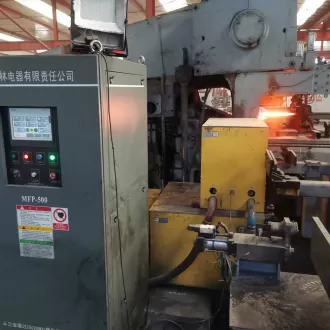
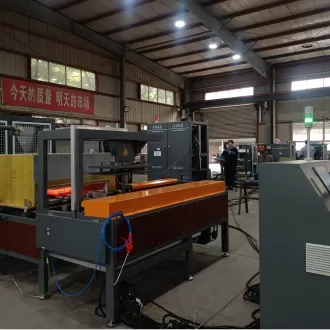
A typical industrial Induction Heating system consists of several essential components that work together to generate and control the heating process.
The power supply converts standard electrical power into high-frequency alternating current. Modern induction heating power supplies often use solid-state inverter technology to generate frequencies ranging from several hundred hertz to hundreds of kilohertz.
The frequency and power level determine how quickly the material heats and how deeply the heat penetrates.
The induction coil acts as the electromagnetic field generator. It is usually made from copper tubing that allows water cooling during operation.
The shape and size of the coil are designed specifically for the geometry of the workpiece. Proper coil design improves heating efficiency and ensures uniform temperature distribution.
Common coil designs include:
Solenoid coils
Pancake coils
Internal heating coils
Custom-shaped coils for complex components
Because induction systems operate at high power levels, cooling systems are required to maintain safe operating temperatures for the power electronics and the induction coil.
Water cooling is typically used to remove excess heat from the system.
Modern induction heating equipment uses digital control systems to regulate parameters such as power output, frequency, heating time, and temperature.
These control systems allow precise and repeatable heating processes, which are essential for industrial manufacturing.
Induction Heating technology is widely used in various industrial sectors due to its efficiency and precise control capabilities.
Induction heating is commonly used for heat treatment processes such as:
Surface hardening of gears and shafts
Annealing of wires and tubes
Tempering of mechanical components
These treatments improve the mechanical properties of metal parts, including hardness, fatigue strength, and wear resistance.
In brazing and soldering applications, induction heating provides localized heating of joints while minimizing heat exposure to surrounding materials.
Advantages include:
Precise heat control
Reduced oxidation
Faster processing times
Improved joint quality
This process is widely used in HVAC systems, automotive components, and electronic assemblies.
Induction furnaces are widely used in metal foundries to melt metals such as steel, aluminum, copper, and cast iron.
Because the heat is generated directly in the metal, induction melting offers high energy efficiency and excellent temperature uniformity.
Additionally, the absence of combustion gases helps maintain high metal purity.
Before forging or rolling, metal billets must be heated to high temperatures. Induction heating systems allow billets to be heated quickly and evenly.
Compared with conventional furnaces, induction billet heating reduces scale formation, improves energy efficiency, and increases production throughput.
Induction heating also plays an important role in advanced manufacturing industries.
Applications include:
Heating graphite crucibles
Silicon crystal growth
High-temperature materials processing
These processes require precise temperature control and stable heating conditions.
Induction Heating offers several important advantages compared with traditional heating technologies.
Because heat is generated directly within the material, induction heating minimizes energy losses associated with heat transfer.
Induction systems can raise the temperature of metal components within seconds, significantly improving production efficiency.
Advanced control systems allow accurate adjustment of heating parameters, ensuring consistent and repeatable results.
Induction heating does not rely on combustion fuels, which eliminates emissions associated with gas-fired heating systems.
Induction heating equipment can easily integrate with automated production lines, robotic handling systems, and digital manufacturing environments.
Induction Heating is a versatile and highly efficient heating technology used across many industrial sectors. By generating heat directly within conductive materials through electromagnetic induction, this method provides rapid heating, precise temperature control, and improved energy efficiency.
From metal heat treatment and forging to brazing, melting, and semiconductor processing, induction heating equipment plays an essential role in modern manufacturing. As industries continue to pursue more efficient and environmentally responsible production methods, the adoption of induction heating technology is expected to expand further in the future.
Previous: None
Latest News
Induction Heating: Principles, Applications, and Equipment
Mar. 16, 2026
Induction Heating is a highly efficient method of heating electrically conductive materials through electromagnetic induction. Instead of transferring heat from an external source such as a flame or heating element, this process generates heat directly within the material itself.
Induction Billet Heaters for Forging
Feb. 14, 2026
In modern forging operations, temperature consistency and production efficiency directly determine part quality and manufacturing cost. Induction billet heaters have become a core heating solution in forging lines due to their speed, precision, and energy efficiency.
Case Presentation
Customized Turnkey induction heating machine
Provide solution according to your requirement, well match with your production line
Related Products
Reform the Manual Production Line to Automatic
Under background of industry 4.0 and customer new request for saving the labor,full and semi-automatic production become the new trends in manufacturing industry.
Solid Sucker Rod Long Bar Two Ends Induction Hot Forge
Sucker rod used to transmit ground power to the oil pump when useing a rod pump to pump oil in oil industry. They are generally solid steel poles made of carbon steel or alloy steel, each about 8 meter long and connected with special couplings. Specially made hollow steel pipes are also used to pump oil which are called hollow oil sucker rods.
Automatic Induction Brazing for Wear-resistant Plate
The pump truck spectacle plate is a plate that looks like glasses, also known as a wear-resistant plate. It is often used in concrete pumps in the industrial field.
In 2018, we received bid for BYD auto for induction pipe bending project, they want to expand their steel structure factory for hot pipe&tube bender industry, to get new increasing profit because the order for auto industry decrease recent year.
DUOLIN Induction hardening is the most common form of induction heat treatment. It is widely used on shaft, gear, pipe .pin and other part in automotive industry.
Vehicle Parts Connection Rod Hot Forging
Induction hot forging is the most common heating application for induction heating,end hot forging for fasteners manufacture,complete billet heating for hot stamping in vehicle parts industry etc
Bearing is an important component in modern mechanical equipment. Its main function is to support the mechanical rotating body, reduce the friction coefficient during its movement, and ensure its rotation accuracy. Used in Metallurgy, wind power, mining machinery, aerospace, automotive parts industry.
Chain Hardening and Tempering Machine
Chains are generally metal links or rings, which are mostly used for mechanical transmission and traction, and are used in all industries that use chain transmission.
Induction heating is the process of heating an electrically conducting object (usually a metal) by electromagnetic induction, through heat generated in the object by eddy currents. An induction heater consists of induction power supply (induction heater) and inductor (coil) that is a shaped to contour the part, and a work station where the part is held and presented to the coil.
Quick Links
Tel.: +86 28 8393 0607
Mob.: +86 158 8242 2821
WhatsApp: +86 158 8242 2821
Add.: 112th Hancheng Road Xindu Industrial Zone Chengdu China